

What If There’s a Smarter Alternative Way to Boost Your Crop Nutrients Without the Need for Expensive Chemical Fertilisers?
As a farmer, you're well aware of the impact the Strait of Hormuz is having on fertiliser supplies. With prices pushed sharply higher, farmers who rely heavily on fertiliser are feeling the sting — while cutting back brings its own risks.
The problem is that fertiliser costs are increasing sharply, yet your crops still need nutrients despite the increase in costs.
For farmers already operating on tight margins, this financial burden of providing nutrients to your crops puts you between a rock and a hard place.
The critical question is: do you spend more to protect crop production? Or do you cut back and risk compromising yield?
Recently, the disruption around the Strait of Hormuz has made these decisions even harder. The Middle Eastern region is an important source of global fertiliser and fertiliser raw materials, and disruption to shipping has put further pressure on supplies. Urea — a key ingredient in fertilisers — has been particularly exposed, making fertiliser more expensive.
At around 46% nitrogen, urea has traditionally been an attractive and relatively cost-effective way of supplying crops with a concentrated source of nitrogen. It is easy to handle, stores well and has been widely used because of its relatively low cost per unit of nitrogen. But urea isn't without its problems and risks.
Applied to a warm soil surface, nitrogen can be lost through volatilisation. It needs sufficient water from rainfall or irrigation to move into the soil, and unlike an NPK fertiliser, urea supplies nitrogen only. Other key nutrients, such as phosphorus and potassium, are still required for plants to maintain healthy growth — but adding them separately adds to the expense.
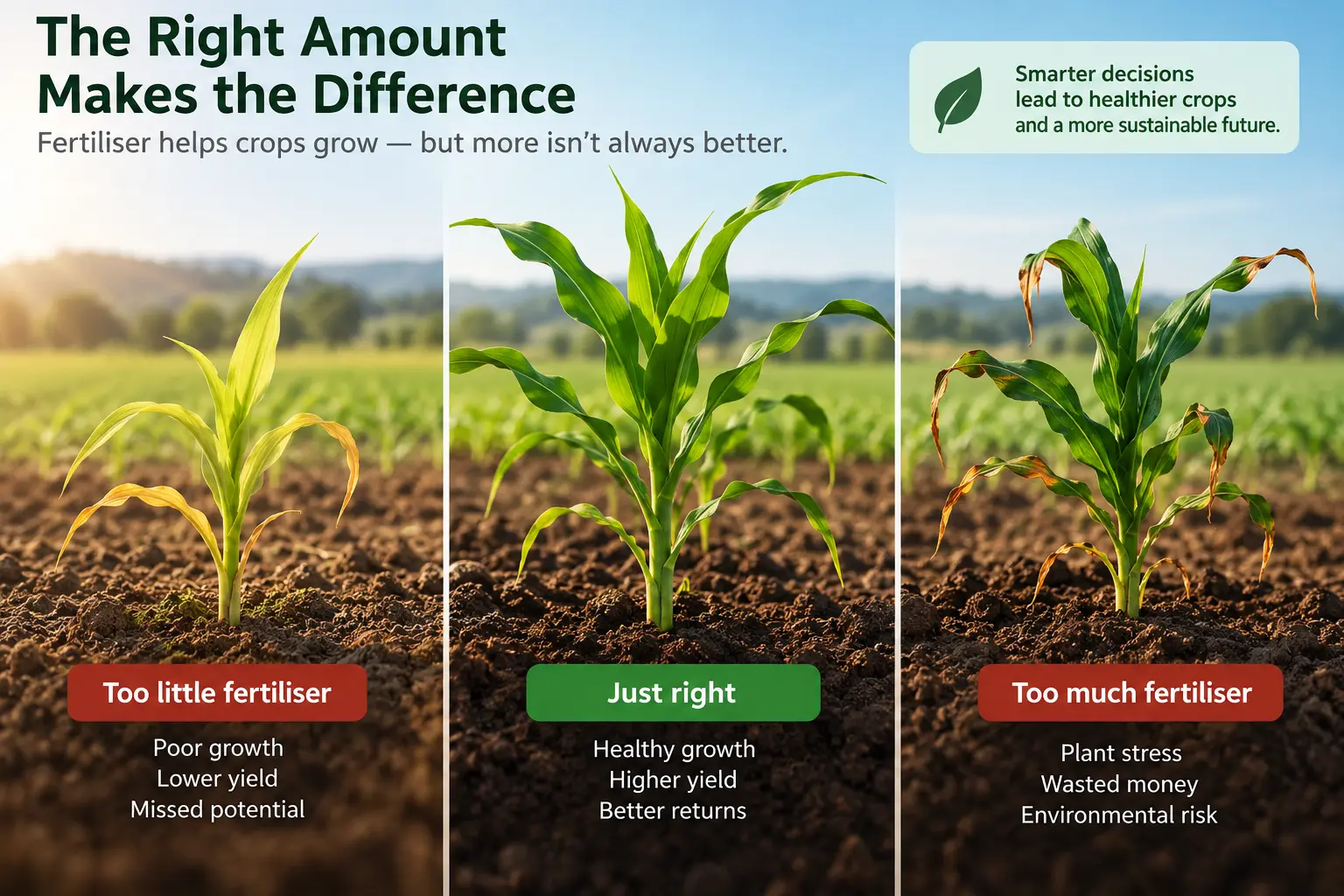
For many farmers, stopping the use of fertilisers is not a choice. So farmers are left carrying the growing expense of an input that is showing no signs of slowing, while still needing to provide enough nutrition for adequate crop health, development and yield.
But what happens when you've paid for the fertiliser, applied it — and the crop fails?
What if the problem isn't just about the fertiliser?
The Missing Piece: Data
A weak patch in a field doesn't come with an explanation. You can see that something is wrong, even if you can't necessarily see why.
A patch of yellowing crops may point towards a nutrient issue. But crop stress can have several causes — for instance, it may be due to a lack of water availability, unhealthy soil conditions, pest infestations, plant disease, nutrient imbalance or poor nutrient uptake.
And sometimes, trying to solve these issues by adding more of the same input can make matters worse. Over-fertilising can be an issue. Excess fertiliser can contribute to salinity stress, nutrient imbalance and nutrient lockout. Excess nitrogen can also produce weak, overly vigorous growth rather than the result the farmer intended.
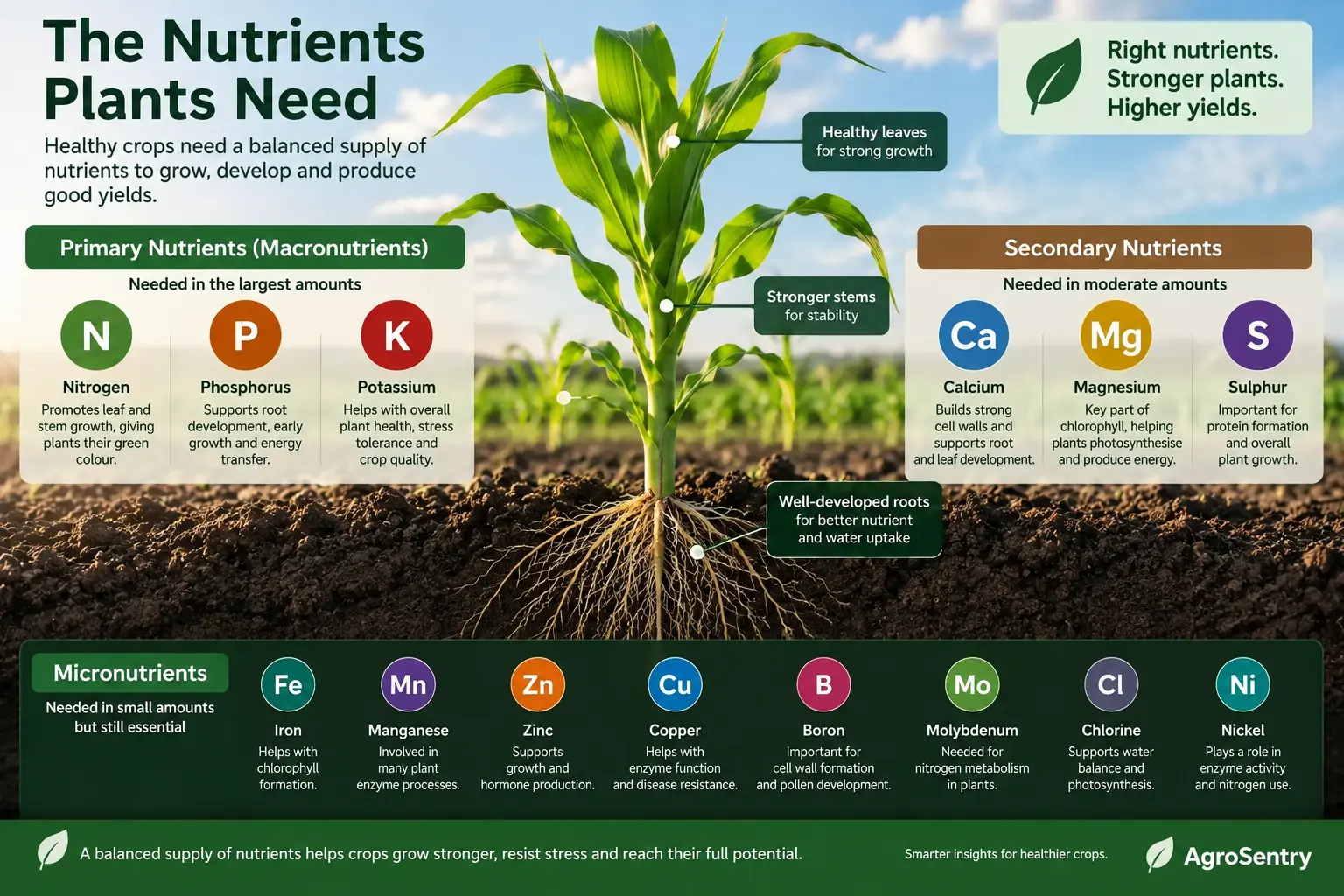
While farmers are stressing about how to keep fertiliser costs down, a much more interesting problem to solve may be the need to know what is actually happening in the field before deciding what fertiliser, or what else, the field needs.
That's where data becomes critical.
As a farmer, you know your land extremely well and can see many problems visibly. If you're adopting more manual methods, such as visual checks, physically hunting for warning signs, carrying out root and soil examinations, or manually counting insects per square metre, this may be an option for smaller farm owners.
But a large field contains hundreds of different conditions that cannot all be checked manually, every day, at the right moment. A more effective method may be a wiser, less labour-intensive choice.
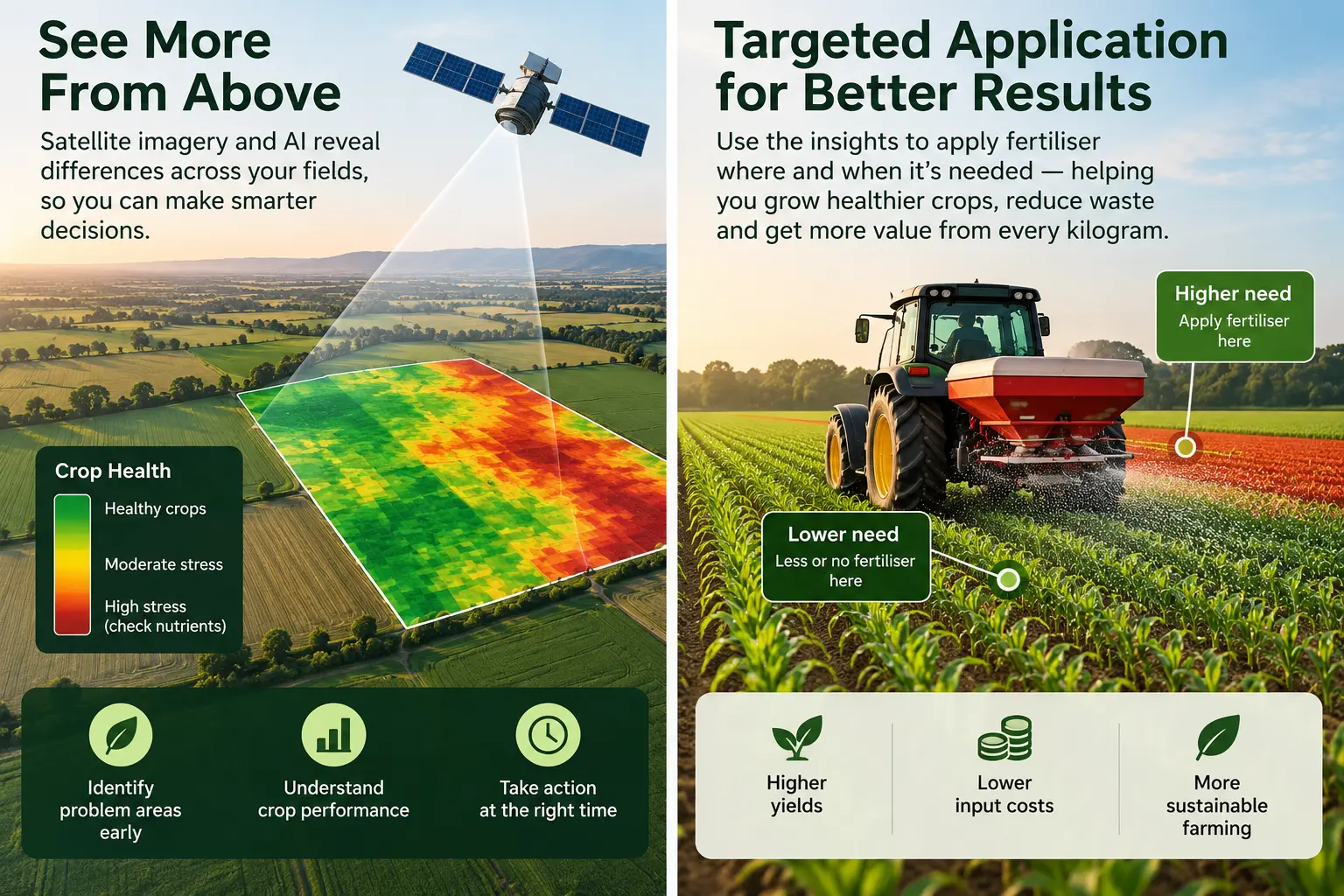
With advancements in technology, drone monitoring and satellite imagery change the scale of what can be observed. Instead of relying only on what can be seen from the ground, multispectral imagery can provide another layer of information about crop condition and variation across the field. AI can then analyse that information and help identify areas behaving differently.
The point isn't to replace the farmer's judgement, but to give that judgement better information. And this is where the idea of targeted nutrient management starts to make sense.
Where technology excels over manual scouting is in speed and scale. Farmers can identify areas that may otherwise have been missed and that warrant attention and investigation before committing more costly inputs.
That is the shift: Instead of manually treating what you can see, you are using the data gathered about the health of your crops, interpreting it into actionable information and deciding what action to take.
Already, many farmers are utilising such technologies with impressive results.
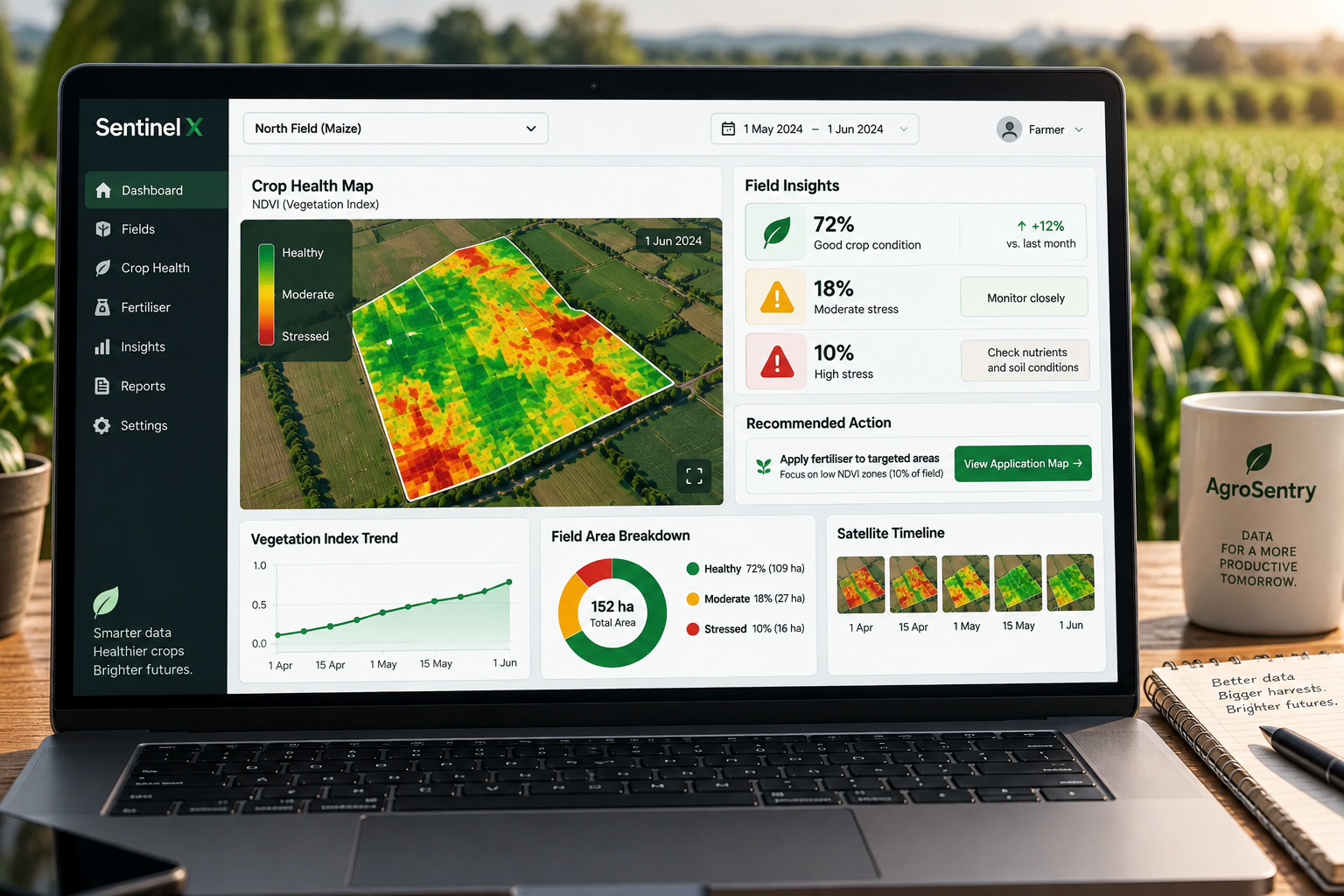
Sentinel X: One Such Alternative Approach
The SentinelX technology is built around two applications: Sentinel X Crop Booster and Sentinel X Pest Control.
For crop nutrition, the Crop Booster is an effective natural alternative approach to conventional fertiliser, designed to support the nutritional absorption and vigour of crops without the side effects of toxic chemical fertilisers.
The wider Sentinel X system also incorporates crop protection technology. Its Pest Control application uses AI-controlled photonic light technology rather than conventional chemical insecticides. The mechanism works by activating the plant's own natural defence response, making the plant less attractive to pests and causing them to either starve or seek out alternative feeding grounds, thus protecting your crop from ruin.
Why does this distinction matter?
SentinelX is not simply another bag of fertiliser. It's a cutting-edge system that has been around for over a decade and utilises AI, drone and satellite-driven monitoring — combining remedy application solutions to treat crops based on the diagnosis.
It is designed to address crop nutrition and crop protection using advanced photonic technology, monitoring and the plant's own invisible biological processes as part of the core system.
But does SentinelX actually work, and is it proven?
Currently operating across farms in 28 countries, recently trialled studies in Kenya and Nigeria show SentinelX's advanced system is still leading the way in offering farmers a natural, more sustainable, non-labour-intensive way to nurture their crops and protect them from invasive pests.
What the Nigerian Trials Showed
Recent Kaduna and Kano Estate Nigerian farm trials in April 2026 continue to demonstrate the effectiveness and success of SentinelX's advanced photonic system, as well as the ease with which it helps eradicate pests and boost healthy crop yields.
SentinelX is endorsed and actively used by farmers, agricultural agencies, extension services, research organisations and government stakeholders involved in monitoring and treatment using drone, AI and satellite technology.
Trials report that unhealthy and infected crops respond exceptionally well to SentinelX and XC, with changes becoming visibly obvious within approximately 14–21 days (depending on the condition of the plants, which may vary based on the extent of the health issue, crop type and infestation damage).
p>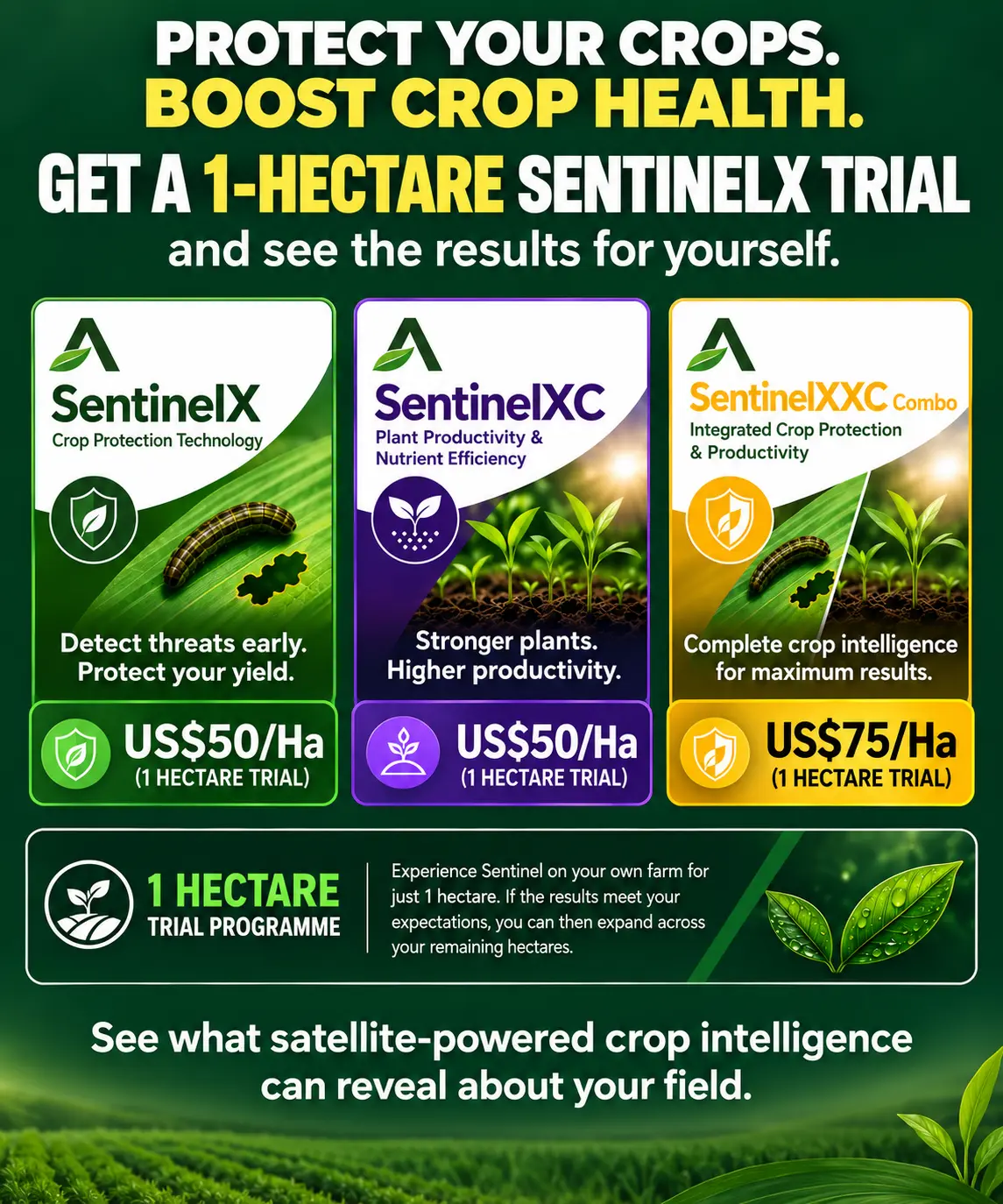
In a recent trial across Nigerian farmlands in 2026, multiple trials were conducted across numerous farms, with trial phases planned across six agro-ecological zones — Kwara, Bauchi, Kaduna, Nasarawa, FCT and Oyo — to revalidate the technology across different environments and maize varieties.
The results are impressive and positive, validating that SentinelX works very well. What is perhaps most surprising is how simple the system is in the way it works.
How Sentinel X Works
It starts with the field itself, using the farm's geographical coordinates.
Once the farm is mapped, the technology can be remotely directed to the infected farmland to track, monitor and analyse the crop before administering treatment via satellite.
Coordinates provide the geographical reference for the farm. This allows the Sentinel X system and the people responsible for deployment to work with a defined agricultural area rather than relying on a farmer to physically treat every part of the field in the conventional way.
In other words, the technology knows where the farm is, gathers information about the crop and uses photonic technology to address the problem.
AI is part of the process, with the technology designed to interact with the crop's biological processes rather than simply delivering another conventional chemical application.
What makes this method distinct is that it avoids the use of toxic chemicals that can affect plants and soil. Instead, this approach works with the plant's own biological processes.
Sentinel XC Crop Booster and SentinelX Pest Control
XC is an alternative crop-nutrition approach to conventional fertiliser, supporting the crop's nutritional absorption and overall vigour.
SentinelX uses the same concept but targets invasive pests such as Fall Armyworm.
What this means for farmers who are stuck in a rut about using pricey fertilisers.
For farmers searching for a non-chemical, cost-effective, non-labour-intensive, safer and more sustainable alternative, the use of SentinelXC technology could be an answer to help reduce dependence on conventional fertiliser while helping farmers and their crops make better use of available nutrition.
See what satellite-powered crop intelligence can reveal about your field.
LEARN MORE & SIGN UP FOR YOUR TRIAL →Frequently Asked Questions About Fertiliser and Crop Nutrition
What is the best fertiliser for crops?
There is no single fertiliser that is best for every crop or every field. The right choice depends on the crop, soil, growth stage, nutrient requirements, weather conditions and the condition of the field. Nitrogen, phosphorus, potassium, NPK, organic and liquid fertilisers can all have a role depending on what the crop actually needs.
Is urea a good fertiliser for crops?
Urea is a widely used nitrogen fertiliser containing approximately 46% nitrogen. It can be an effective and relatively cost-efficient source of nitrogen, but it only supplies nitrogen and can be subject to nitrogen losses through volatilisation if it is not properly incorporated into the soil.
Which is better, NPK or urea?
Neither is automatically better. Urea provides a concentrated source of nitrogen, while NPK fertilisers provide a combination of nitrogen, phosphorus and potassium. The appropriate choice depends on the crop's nutrient requirements and what is already available in the soil.
What are the disadvantages of urea fertiliser?
Urea supplies nitrogen but does not provide phosphorus, potassium or other nutrients a crop may require. Nitrogen can also be lost through volatilisation when urea is applied to a warm soil surface, particularly when there is insufficient water to move it into the soil.
What is fertiliser management?
Fertiliser management is the process of deciding what nutrients a crop needs, how much is required, when they should be applied and where they should be applied. Good management aims to provide the right nutrient at the right rate, at the right time and in the right location.
What is precision fertiliser application?
Precision fertiliser application uses information about variation across a field to make more targeted input decisions. Instead of automatically treating an entire field in exactly the same way, farmers can identify areas that may require different levels of attention.
Can satellite monitoring help with fertiliser decisions?
Yes. Satellite imagery can provide repeated information about crop condition and variation across a field. This can help farmers and agronomists identify areas that may require investigation and make better-informed decisions about crop nutrition and other inputs.
Can AI help farmers decide where fertiliser is needed?
AI can analyse large amounts of agricultural imagery and help identify patterns, changes and areas behaving differently. It does not replace soil testing, agronomic knowledge or the farmer's judgement, but it can provide another layer of information to support decisions.
What is Sentinel X Crop Booster?
Sentinel X Crop Booster is the crop-nutrition application within the Sentinel X system. It is positioned as an alternative approach to conventional fertiliser, designed to support nutritional absorption and crop vigour.
How does Sentinel X work?
Sentinel X combines farm location, AI-controlled technology and photonic technology as part of its crop nutrition and crop protection approach. The Crop Booster focuses on crop nutrition, while Sentinel X Pest Control uses photonic technology designed to activate the plant's natural defence response against Fall Armyworm.
Has Sentinel X been tested in the field?
Yes. Sentinel X was previously deployed in Kenya and subsequently piloted in Kaduna and Kano, Nigeria. The Nigerian trial included control farms and involved farmers, agricultural agencies, extension services, research organisations and government stakeholders. The project reported visible differences between treated and control farms within approximately 14–21 days and planned a second phase across six agro-ecological zones.
What technology is used to monitor crops?
Modern crop monitoring can combine satellite imagery, multispectral imagery, drones, field observations and AI analysis. These technologies can help identify variation in crop condition, stress and other changes across large agricultural areas.
How is remote sensing used in farming?
Remote sensing allows information about crops and fields to be collected without having to physically inspect every part of the farm. Satellite and other remote-sensing technologies can help monitor crop condition, identify variation and track changes over time.
What is the importance of technology in agriculture?
Technology can give farmers more information about what is happening across their fields. When that information is combined with agricultural knowledge, it can support better decisions about crop nutrition, crop protection, irrigation and where attention may be required.