
You won't see fall armyworm coming. That's the whole problem.
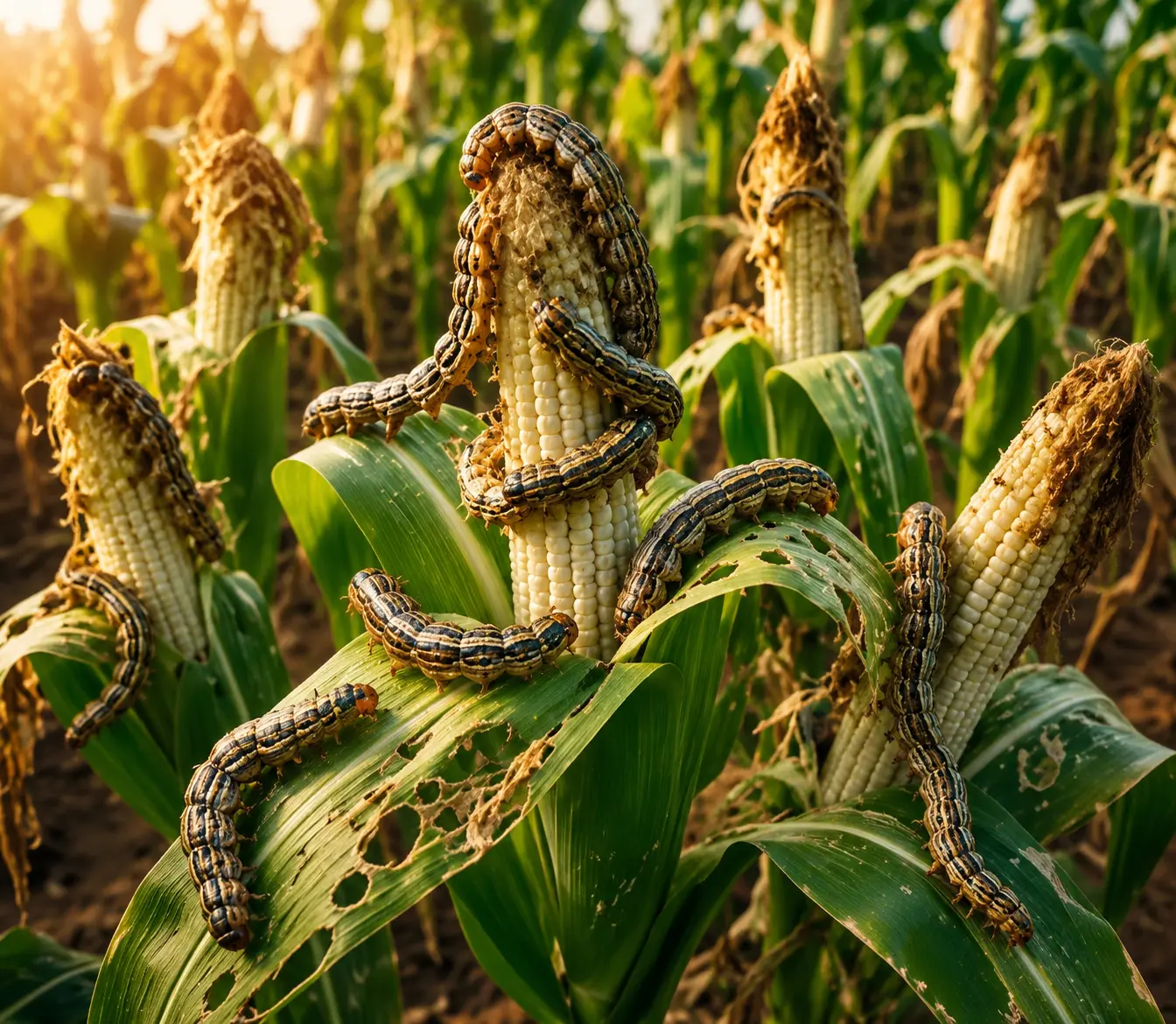
For crop farmers, the war against Fall Army Worm is an ongoing battle. Farmers are reporting huge losses due to the destruction of crops and the feeding frenzy of the invasive Fall Army Worm. It's actually a caterpillar that can munch its way through a broad varity of crops and vegetables including maize, rice and sourgum. It's reach is vast and it is globally impacting on crop production yields and adding to the burdens of pest control management, labor intensive manual scouting and the misery of distressed crops.
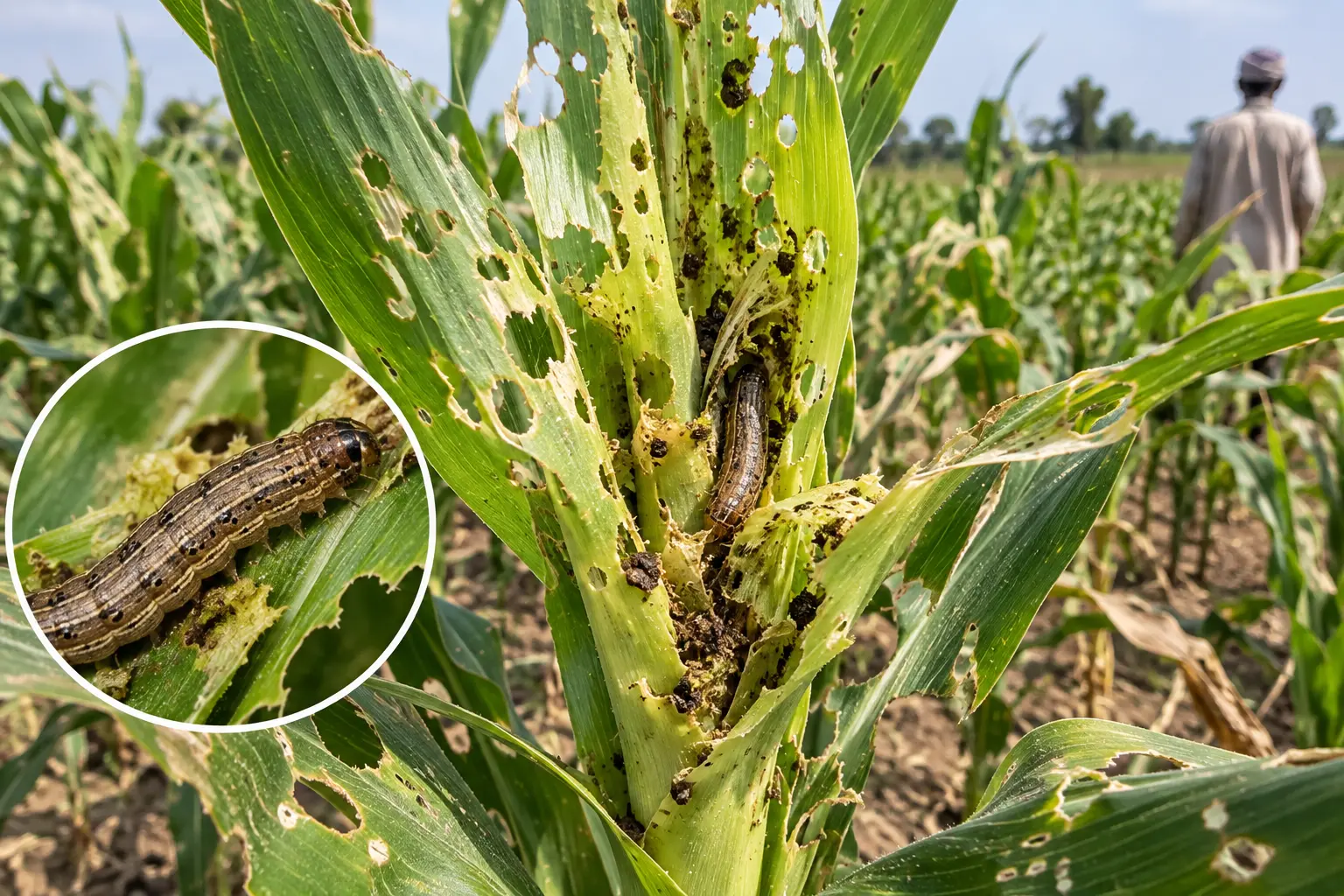
It starts small. A translucent patch on a leaf. A pinhole of feeding damage near the whorl. Nothing that would make you stop the truck, let alone ring any alarm bells. You've seen worse from wind, hail and a hundred harmless things that come and go with the season.But this time, something is already inside the plant. And it's eating its way inside out.
By the time fall armyworm becomes obvious from the edge of the field, it may have stopped being a small problem. That's not necessarily a failure of scouting. It's how the pest operates — it hides, it develops quickly, and some of its most important feeding happens where you cannot see it from outside the plant. For maize farmers in particular, that creates a problem that goes beyond the caterpillar itself: timing, visibility and scale.
A Moth That Looks Harmless. A Larva That Isn't.
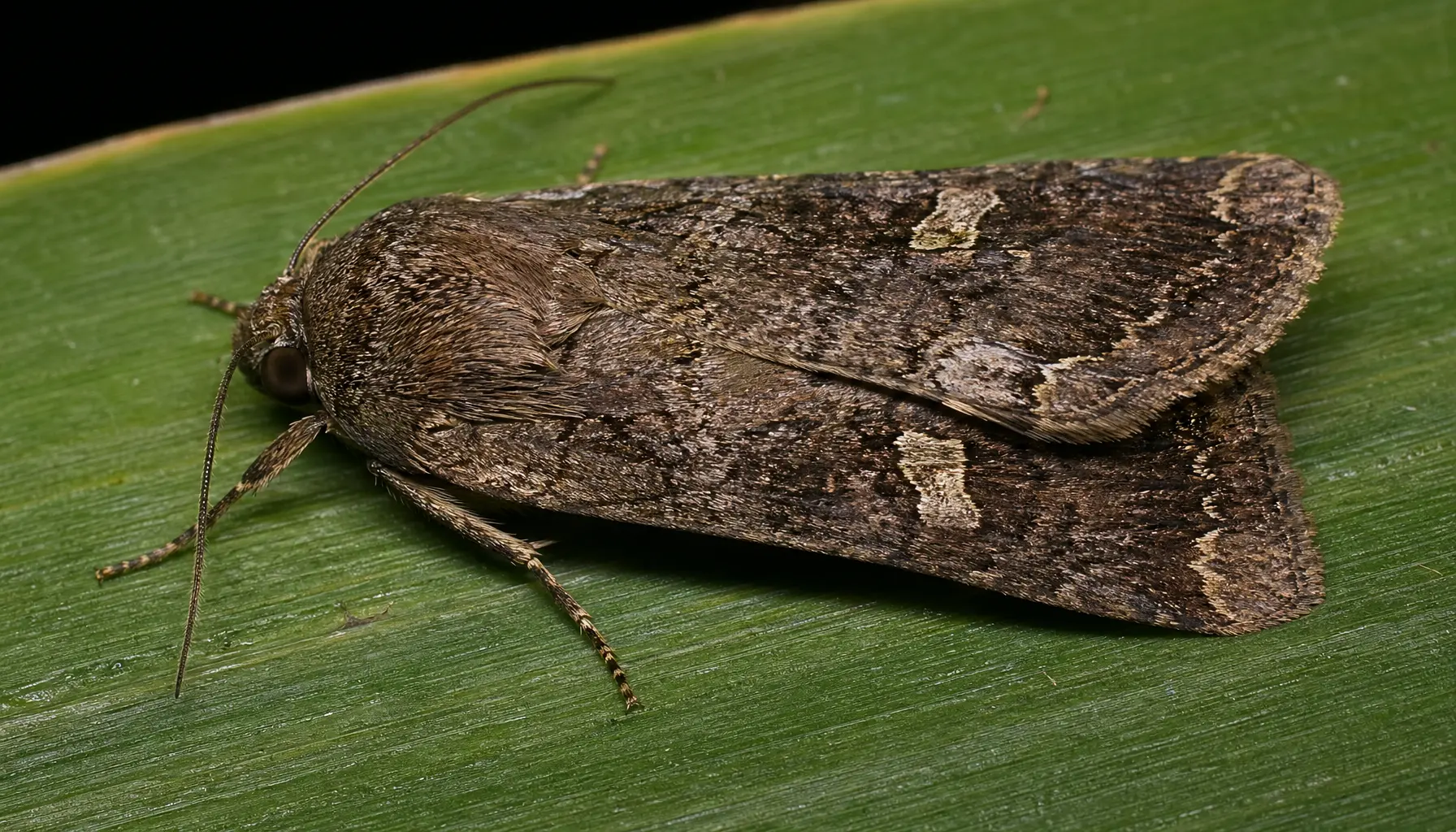
Spodoptera frugiperda — fall armyworm — is a moth species. But the adult moth is not what strips the maize plant. The damage comes with the next generation.
Eggs are laid on host plants. The larvae emerge, begin feeding and start moving through their development. At first, the evidence can be easy to miss: a few small marks, translucent patches or early feeding damage on young leaves.
Then the larvae grow.
Inside the Whorl, the Clock Is Already Running
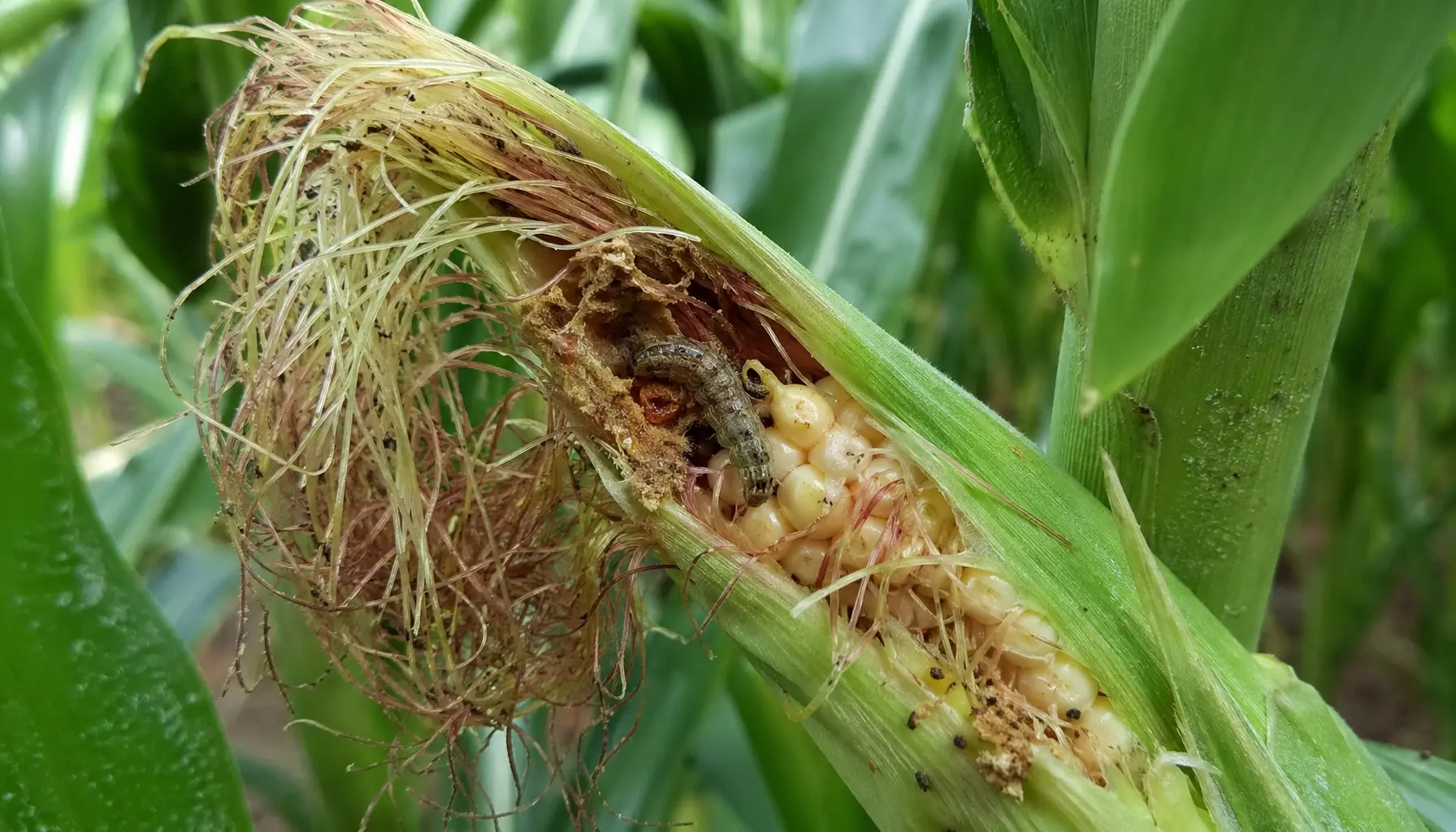
As fall armyworm larvae mature, they consume increasingly more plant material. In maize, they commonly move into the whorl and feed on the tender developing leaves inside.
That is what makes the pest particularly difficult to judge from the outside. The crop can still look broadly healthy while larvae are feeding inside individual plants.
Open the whorl and the picture can be very different: fresh feeding, frass, ragged emerging leaves and, if you're lucky enough to catch it at the right moment, the larva itself.
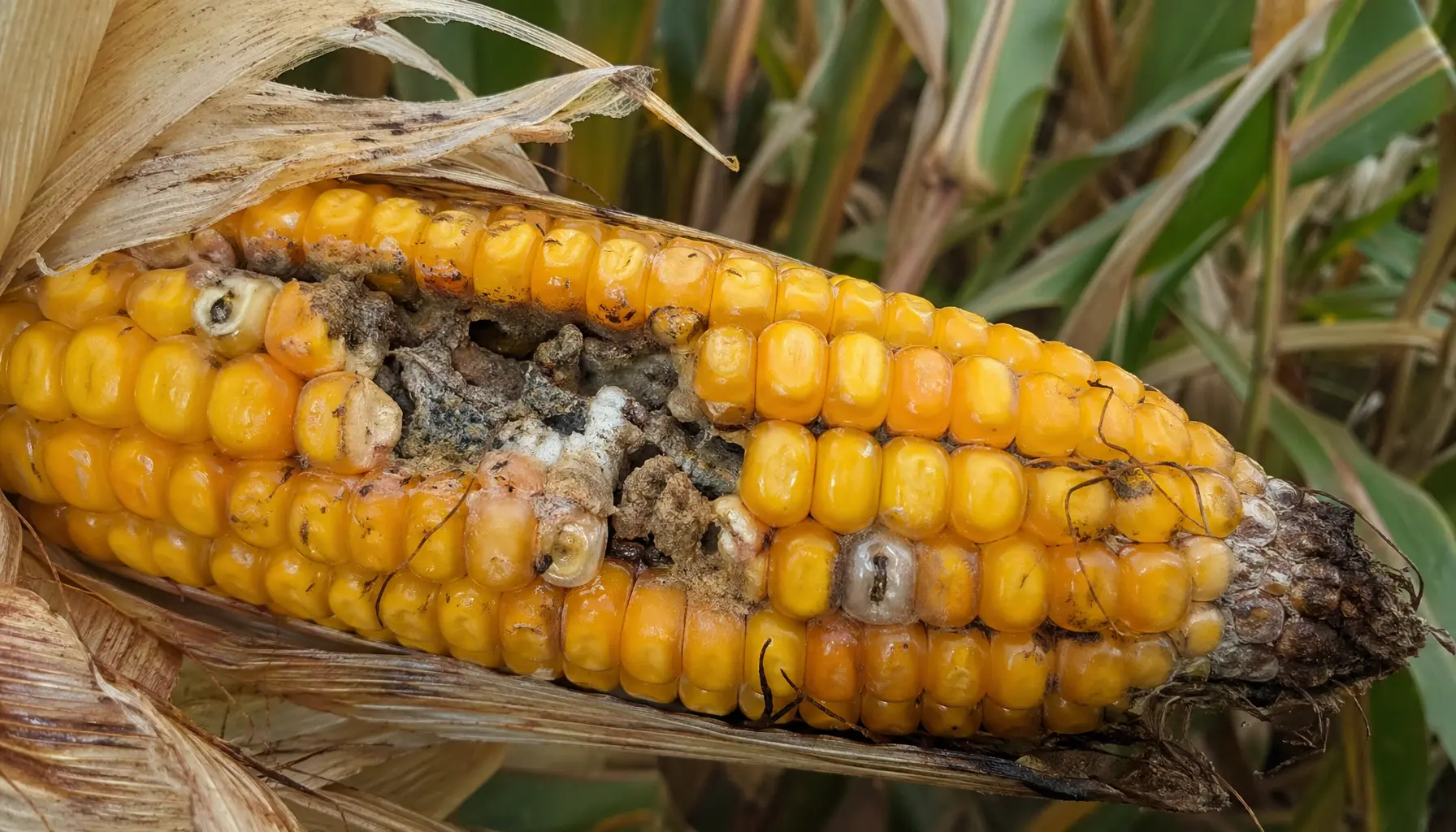
As the infestation develops, the signs become harder to ignore. Window-pane feeding gives way to larger, irregular holes and increasingly ragged leaves. In severe cases, substantial leaf tissue can be lost and the growing point may be affected.
The problem is that visible damage is a record of what has already happened. The more interesting question is what was happening before the damage became obvious.
It Doesn't Stay Where It Starts
Fall armyworm is not a pest that politely stays in one field. Adult moths can disperse across agricultural areas, while favourable conditions can allow populations to build rapidly.
First reported in Sub-Saharan Africa in 2016, fall armyworm had spread to the Indian subcontinent and China by 2018 and reached Australia by 2020. It is now an established crop-protection concern across large parts of Africa, Asia and other maize-producing regions.
Maize is a major target, but it is not the only crop at risk. Fall armyworm can also feed on crops including rice, cotton, sorghum, millet and various vegetables.
Which leaves maize farmers with a much bigger question than simply how to kill the pest:
How early can you find where fall armyworm is taking hold — before a small problem becomes a field-wide problem?
A Few Holes in a Leaf. A Billion-Dollar Problem.
Nobody looks at a handful of chewed leaves and sees a global crop-loss crisis. But that is precisely how fall armyworm becomes expensive: small losses accumulate while the infestation develops out of sight.
Research cited by Syngenta has estimated that fall armyworm can reduce harvests by as much as 50%. FAO estimates cited by Syngenta put annual corn losses at almost 18 million tonnes, while CABI has estimated losses in Africa at nearly $10 billion a year.
The numbers are enormous. But the farmer does not experience a billion-dollar loss.
They experience a field that produces less than it should. More scouting. More labour. More machinery. More crop protection costs. And potentially another decision that has to be made under pressure.
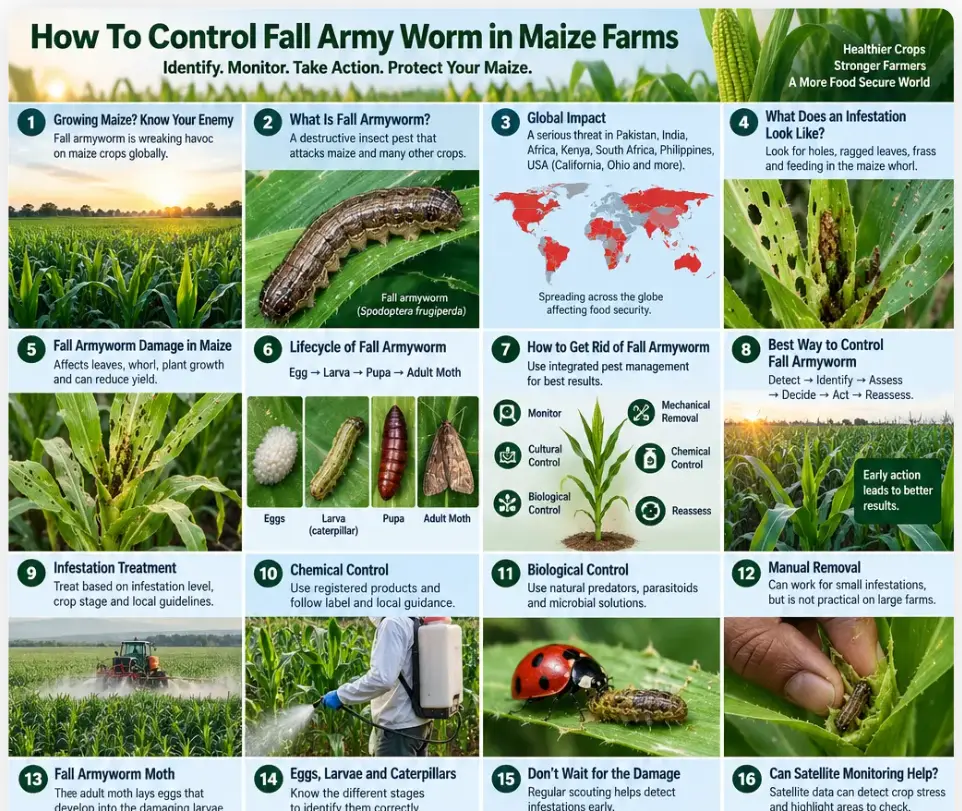
Farmers already have tools for managing fall armyworm. Regular scouting remains essential. Biological, cultural and manual approaches can have a role. Where chemical intervention is justified, locally registered insecticides and agronomic recommendations remain important.
But every one of those decisions starts with the same thing:
Knowing where the problem is.
The Problem Gets Harder When the Farm Gets Bigger
On a small field, you can walk the rows, inspect the plants and open the whorls. On hundreds or thousands of hectares, the mathematics changes.
You cannot physically stand beside every plant. You cannot inspect every hectare at the same frequency. And you cannot assume that pest pressure will be distributed evenly across the entire farm.
That creates an uncomfortable gap between what the farm needs to know and what a field team can realistically see.
So what if you could see where to look before you went looking?
This Is Where SentinelX Changes the Picture
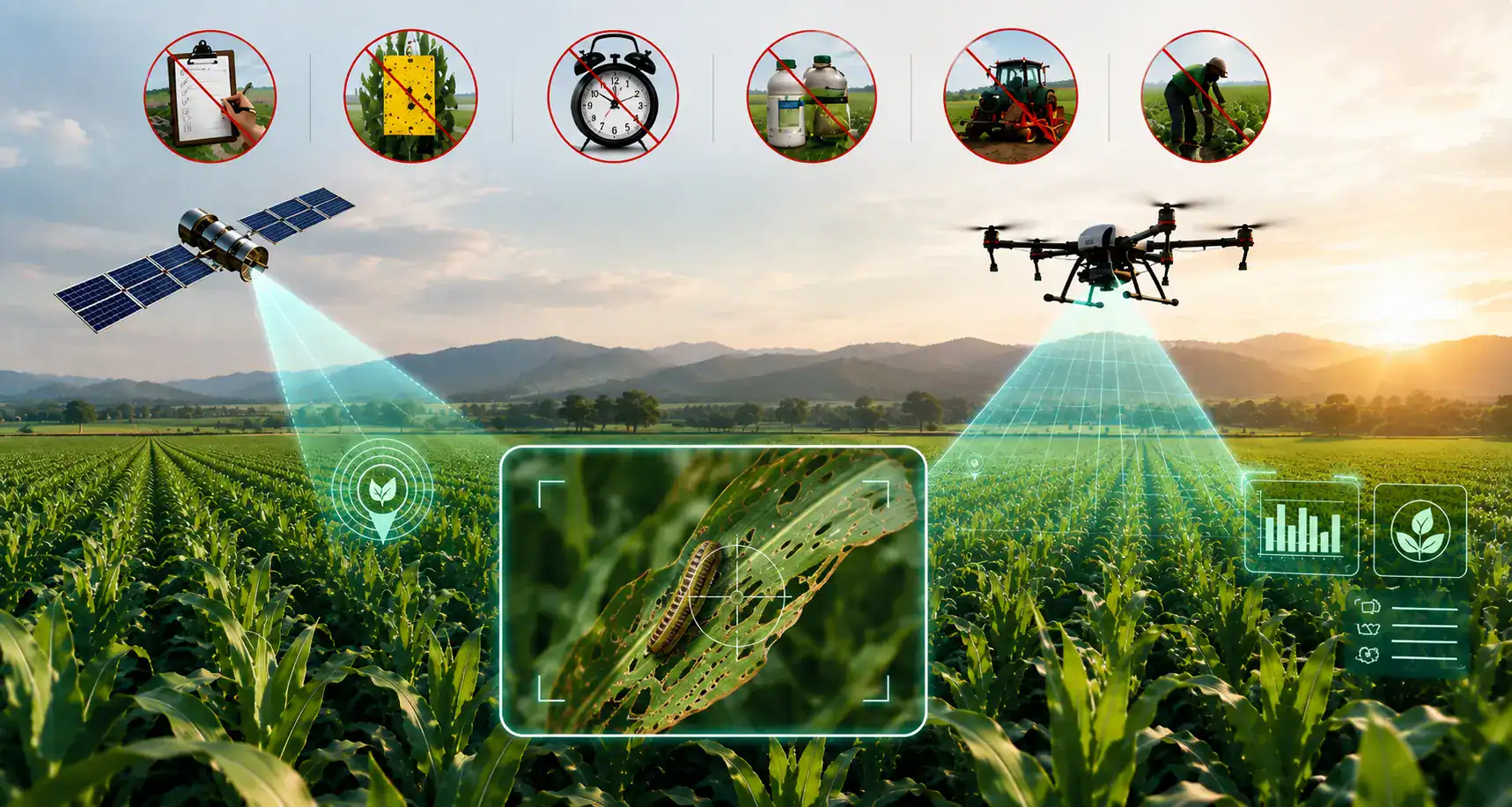
SentinelX combines satellite crop monitoring with AI-driven analysis to watch agricultural fields at a scale that is difficult to achieve from the ground alone.
It does not claim to photograph a caterpillar hiding inside a maize whorl. The satellite cannot do that.
What it can do is reveal where the crop is behaving differently — areas that stand out and may warrant a closer look.
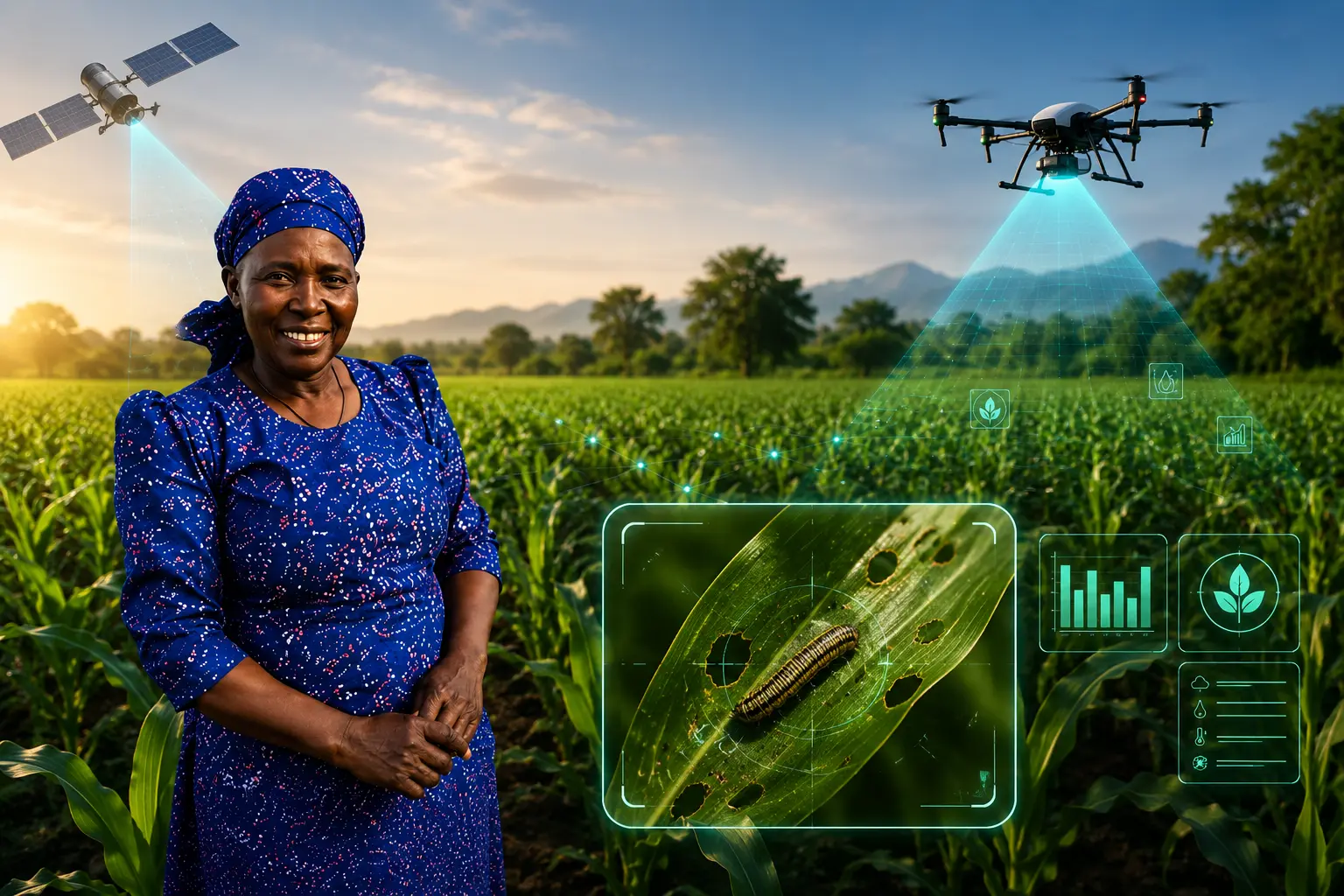
That is the important distinction.
SentinelX is not another method of treating fall armyworm. It is a different way of approaching the problem that comes before treatment: finding where attention is needed.
Satellite monitoring gives you the wider view. AI helps identify the areas that stand out. The field team investigates those locations on the ground. The agronomist determines what is actually happening and what response, if any, is appropriate.
The technology doesn't replace the scout. It gives the scout somewhere to start.
From Searching the Farm to Searching the Signal
That sounds like a small distinction until the crop covers thousands of hectares.
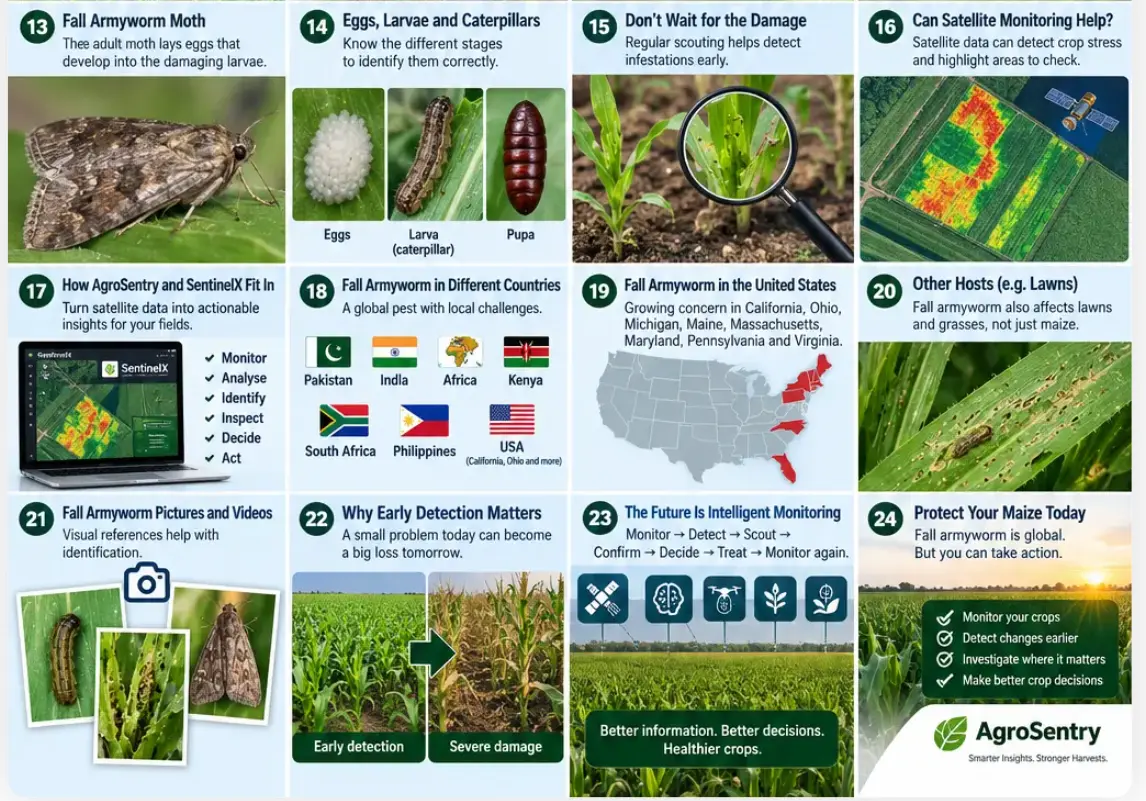
Instead of treating every part of the farm as equally worthy of investigation, crop intelligence can help narrow the field. An area changes. The system flags it. The team goes there. The plants are inspected. The cause is established.
It may be fall armyworm.
It may be another crop problem.
Or it may turn out to be nothing requiring intervention.
That is exactly why field confirmation still matters.
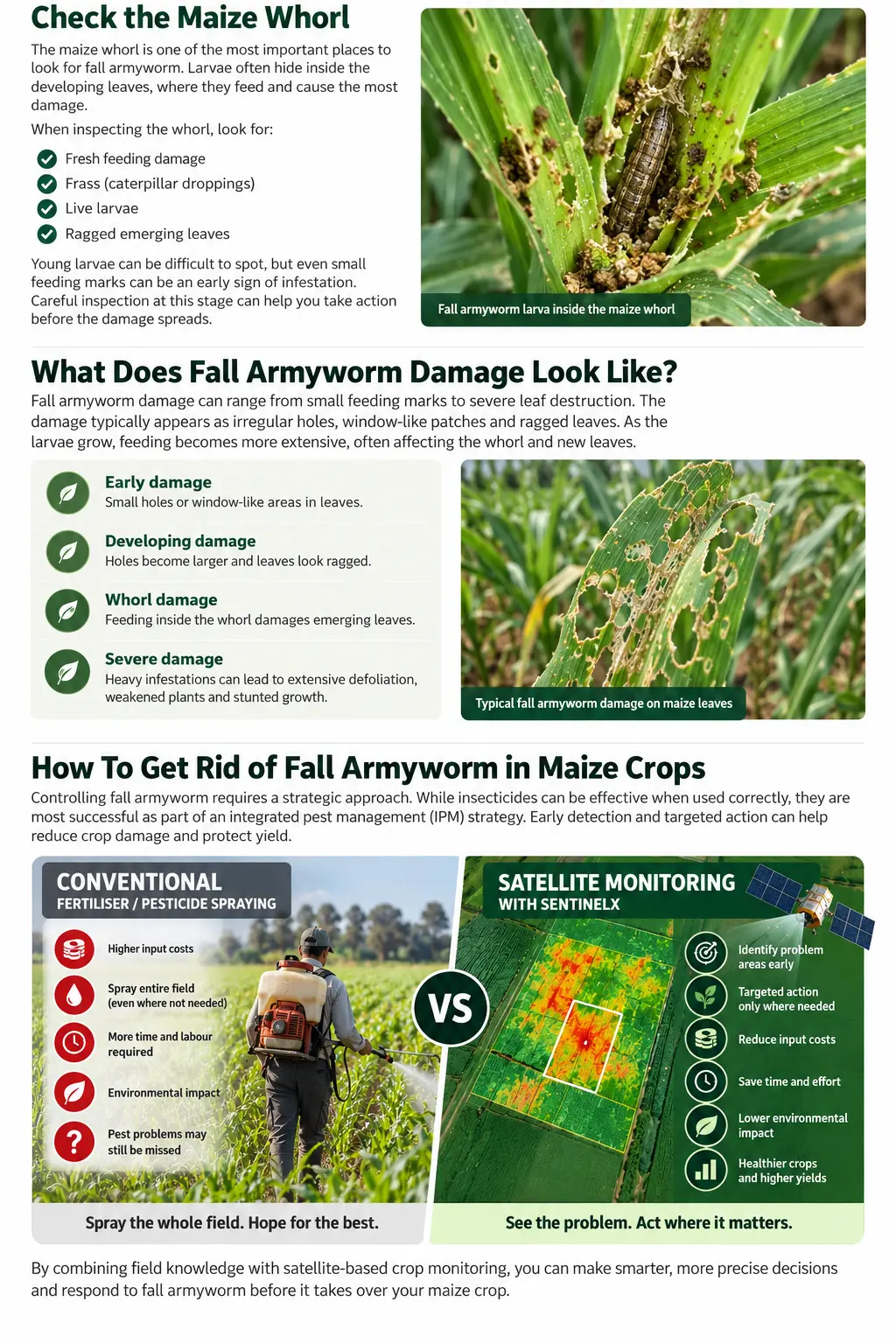
The value is not pretending the satellite has diagnosed the pest. The value is reducing the amount of crop your team has to search blindly.
Because Timing Is Where the Money Is
Fall armyworm does not wait for the next scouting round. Larvae continue to develop while the crop develops, and the management challenge changes as they become larger and more protected inside the plant.
Early information does not guarantee that every infestation will be caught early, nor does it guarantee a particular treatment outcome. What it can provide is something every farmer values: more time to investigate before the situation becomes harder to manage.
That is why the real opportunity is not simply seeing damage sooner.
It is finding the places worth investigating sooner.
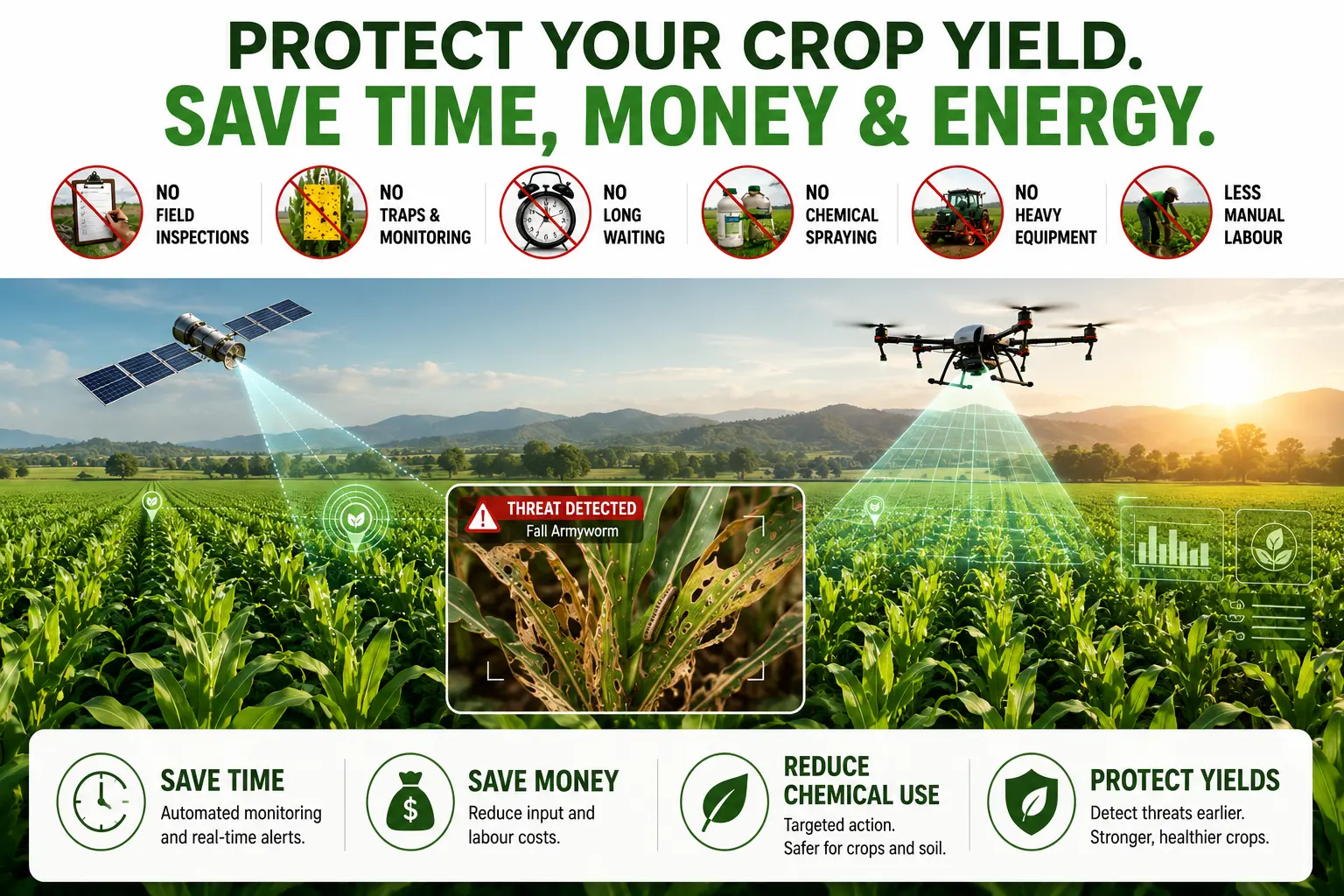
Fall Armyworm in Pakistan, India and Africa
For maize producers in Pakistan, India and across Africa, fall armyworm is now part of the crop-protection equation. The same is true in major maize-producing areas including Kenya and South Africa, as well as in the Philippines and other parts of Asia.
The conditions are different from one farming system to another. Pest pressure varies. Crop stages vary. Available control options vary.
But the fundamental problem remains remarkably consistent:
How do you find a developing problem across a crop too large to inspect plant by plant?
What About Chemical Control?
Chemical control remains an important option when fall armyworm reaches a level where intervention is justified. But product selection and application must follow local registration requirements, crop labels and professional agronomic recommendations.
There is another reason timing and monitoring matter. Repeated use of the same mode of action can increase resistance pressure, making an already difficult pest-management problem harder to manage.
The objective is therefore not simply to spray. It is to understand what is happening in the crop, determine whether intervention is warranted, and assess what happens afterwards.
What About Biological and Manual Control?
Biological control, predators, parasitoids, biological products and agroecological approaches such as push-pull systems can all have a role in appropriate farming systems. Manual removal can also be useful where infestations are small and egg masses or larvae are accessible.
But once the affected area expands across a commercial-scale farm, the same question returns: where should the limited time and attention of the field team go first?
The Future of Fall Armyworm Management Is More Connected
The answer is unlikely to be one technology replacing everything that came before it. The more practical direction is technologies working together.
Field scouting provides what is happening on the ground. Satellite imagery provides the wider view. AI helps process that wider view. Digital crop monitoring connects observations over time. Agronomic judgement turns all of that information into a decision.
That is the direction crop protection is moving — from isolated observations to a continuous picture of what is happening across the farm.
You Cannot Walk Every Plant
There will always be a place for the farmer walking the crop. There will always be a place for opening the whorl, finding the larva and making the agronomic call.
But the scale of modern agriculture creates a simple limitation: you cannot physically stand beside every plant.
SentinelX is designed to extend what your field team can see — helping identify where crop conditions are changing and where investigation may be most valuable.
Because when fall armyworm is already feeding, the question is not whether you know how to fight it.
The question is whether you found it early enough to have a choice.
You Did Not Grow Your Maize to Feed Fall Armyworm
You planted the crop to produce a harvest. You invested in the seed, the land, the water, the fertiliser, the labour and the machinery.
Fall armyworm has no interest in any of that.
It needs a host plant and enough time to grow.
SentinelX gives you another way to watch what is happening across the crop — using satellite monitoring and AI to identify areas of concern and help direct field investigation.
Because on a farm measured in thousands of hectares, knowing where to look can matter almost as much as knowing what to do when you get there.

See what satellite-powered crop intelligence can reveal about your field.
LEARN MORE & SIGN UP FOR YOUR TRIAL →Frequently Asked Questions About Fall Armyworm
What is fall armyworm?
Fall armyworm, Spodoptera frugiperda, is a moth species whose larval stage feeds on maize and other crops. The caterpillar is responsible for the characteristic feeding damage seen in affected plants.
How do you identify fall armyworm in maize?
Look for window-pane feeding, translucent patches, holes, ragged leaves, fresh feeding around the whorl, frass and live larvae. Fall armyworm larvae commonly have a pale inverted-Y marking on the head, along with distinctive markings towards the rear of the body.
What does fall armyworm damage look like?
Early damage can appear as small feeding marks or translucent patches. As larvae develop, feeding can produce larger irregular holes, ragged leaves, fresh whorl damage, frass and, in severe infestations, substantial defoliation.
Where does fall armyworm hide?
Fall armyworm larvae commonly feed and hide inside the maize whorl, where they can be difficult to see from outside the plant. Inspecting the centre of the plant is therefore an important part of field scouting.
How do you control fall armyworm in maize?
Management typically involves regular scouting, early identification and integrated pest management. Depending on the infestation and local conditions, control options may include cultural, biological, manual and chemical approaches.
What is the best way to control fall armyworm?
There is no single approach that works in every field. Effective management depends on early detection, correct identification, crop stage, infestation severity and appropriate intervention based on local agronomic recommendations.
What is the treatment for fall armyworm in maize?
Treatment depends on the crop, infestation, larval stage and local regulations. Where insecticides are required, use locally registered products strictly according to their labels and professional agronomic recommendations.
Can fall armyworm be removed manually?
Yes. Manual removal can be useful where infestations are small or localised and larvae or egg masses are accessible. It becomes increasingly difficult as the affected area expands across a commercial farm.
What are the stages of the fall armyworm life cycle?
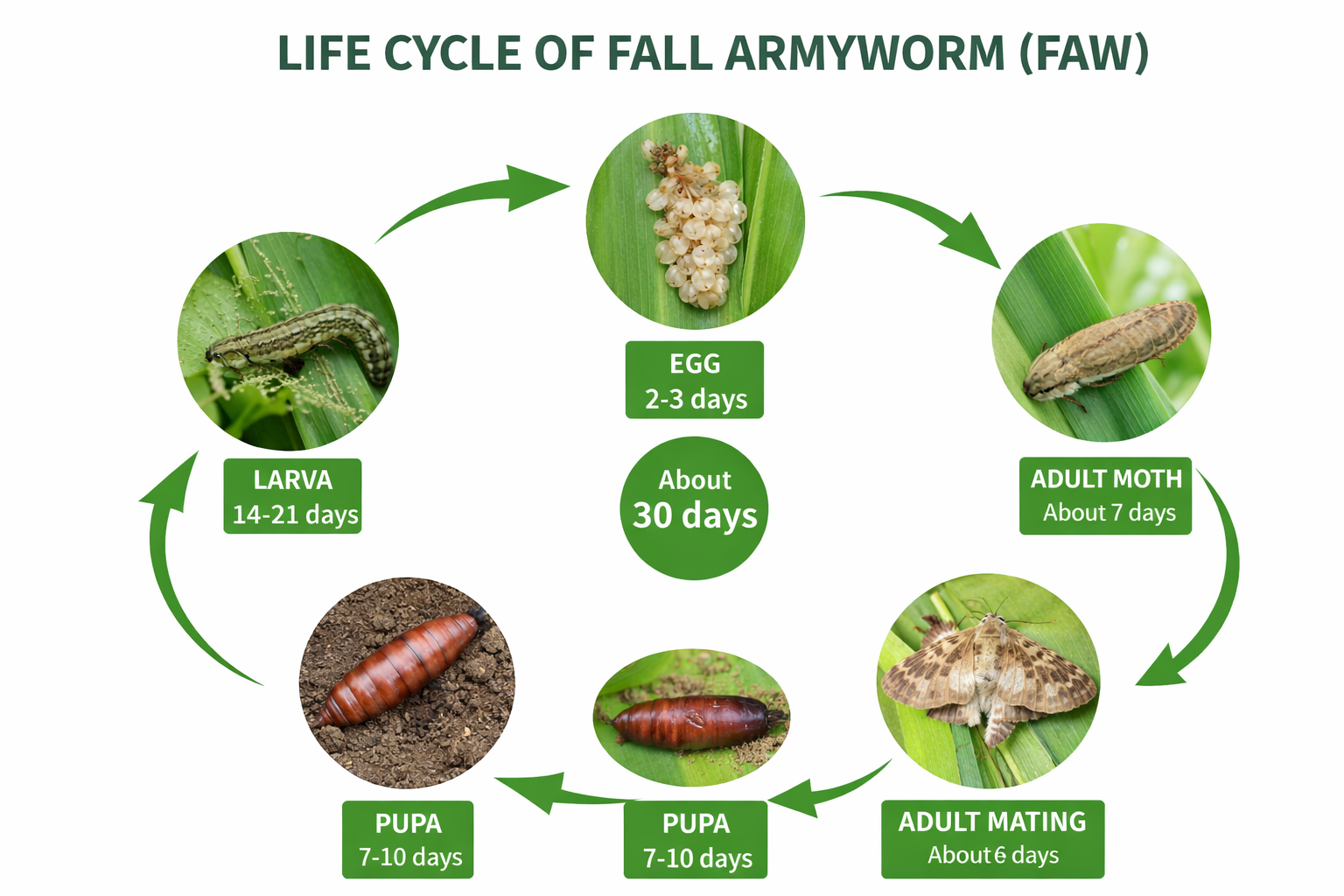
The fall armyworm life cycle has four main stages: egg, larva, pupa and adult moth. The larval stage is responsible for the feeding damage to crops.
When is fall armyworm easiest to manage?
Younger larvae are generally more exposed and easier to manage than larger larvae, which can become increasingly protected inside the whorl. This is one reason early detection and timely field investigation are important.
Does fall armyworm affect maize in Africa?
Yes. Fall armyworm is an important maize pest across many parts of Africa, including countries such as Kenya and South Africa.
Does fall armyworm affect maize in Pakistan and India?
Yes. Fall armyworm is an important maize pest in both Pakistan and India and has become part of the crop-protection challenge across the region.
Does fall armyworm affect maize in the Philippines?
Yes. Fall armyworm is an important maize pest concern in the Philippines and other parts of Asia.
Can satellite monitoring detect fall armyworm?
Satellite imagery does not directly see a fall armyworm caterpillar hiding inside a maize whorl. Its value is in monitoring crop condition across large areas and identifying areas that may warrant closer field investigation.
Can AI help with fall armyworm management?
AI can analyse crop-monitoring data and help identify areas of concern across large agricultural fields. It can help prioritise where field teams investigate, while physical scouting and agronomic judgement remain essential for confirming the problem and deciding on the appropriate response.
Can SentinelX replace field scouting?
No. SentinelX is designed to complement field scouting, not replace it. Its role is to help identify areas of concern so farmers, scouts and agronomists can direct their attention where investigation may be most valuable.